Remember the magic rule of 3 for rescue animals
3 days to decompress
3 weeks to know your routine
3 months to become a full member of the family
DECOMPRESSION IS THE SINGLE MOST IMPORTANT THING YOU CAN DO FOR YOUR NEW RESCUE DOG!
The first few days are when we’re most likely to see an adoption break down, and in our experience, it’s almost invariably due to insufficient decompression.
THE DOG YOU BRING HOME MAY NOT BE THE DOG WE KNOW.
That lovely, happy dog you met may arrive in your home stressed, frightened, confused and wondering where on earth their safe people have disappeared to.
Everything familiar has gone. They don’t know you, your home or whether this is another temporary stop.
We’ve spent time assessing their behaviours, understanding their triggers, building confidence and earning their trust. But things they coped with perfectly well in our care may suddenly feel overwhelming. Things can appear fine on the surface but very quickly, over seemingly minor issues, escalate to a high stress situation.
And that’s when we can see growling, snapping, guarding or behaviours that weren’t apparent during assessment.
Your job is to help them feel safe, not add to their stress. Think of them as an unexploded bomb. Handle with care!
That’s decompression.
The dog you are about to take home is a living, sentient, animal adjusting to major changes — treat them like an unexploded bomb 💣
The First 72 Hours
The first 72 hours are when rescues are most likely to see an adoption break down, and in our experience, this is almost invariably down to insufficient decompression.
Whether you adopt through us or another Rescue, you will be asked to decompress your dog, so with a couple of our spicier characters heading off to new homes soon, we thought this was worth a reminder!
The lovely calm happy dog you met in meet and greets, after a car journey with strangers may well be:
- Stressed
- Frightened
- Confused
- Panicked
- Unsure whether this is a permanent home
- Wondering where their “safe people” have gone
Everything familiar has disappeared. They do not yet know you, your home or what to expect
The dog we know had time to settle. We have assessed their behaviour, learned their triggers, built their confidence and earned their trust. In your home, even things they managed well with us may suddenly feel overwhelming. Stress can lead to growling, snapping, guarding or other behaviours that were not apparent during assessment.
Your job in the first few days is to help your dog feel safe and secure, so they don’t feel the need to display these out-of-character behaviours.
That is decompression.
Why Decompression Matters
The work we do before adoption and the decompression you provide afterwards are equally important. Either can undo the progress made by the other.
We will explain your dog’s:
- Triggers
- Behaviours
- Likes and dislikes
- Management strategies
- Do’s and don’ts
However, we cannot manage decompression in your home for you (unless we move in, which we’d rather not — and you probably wouldn’t thank us for it either!).
A dog who has spent weeks building confidence can become overwhelmed within days. If an adoption breaks down following stress-related incidents or behaviours, those behaviours become part of the dog’s rap sheet and may make finding another home more difficult.
Decompression is not optional. It is the next stage of the work we have already started.
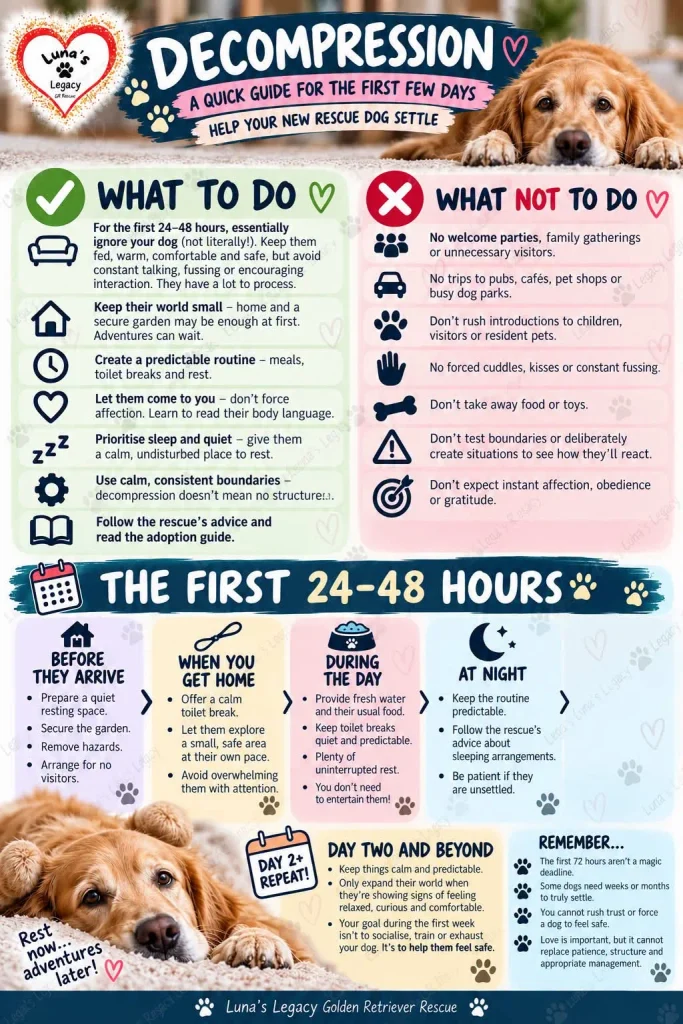
What to Do ✅
- Keep the first 24–48 hours quiet. Essentially ignore your dog — not literally, of course. Keep them fed, warm, comfortable and safe, but avoid constant talking, fussing or encouraging interaction. They have an enormous amount to process. Let them do it in peace.
- Keep their world small. Home and a secure garden may be enough at first. Adventures can wait.
- Create a predictable routine. Keep meals, toilet breaks and rest periods consistent.
- Let your dog come to you. Do not force affection or interaction. Learn to read their body language.
- Prioritise sleep and quiet. Provide an undisturbed place where your dog can rest.
- Use calm, consistent boundaries. Decompression does not mean abandoning structure.
- Read the adoption guide. Follow the rescue’s advice about triggers, introductions and management.
What Not to Do ❌
- Do not hold welcome parties or invite unnecessary visitors. Your dog does not need a welcoming committee.
- Do not take your dog to pubs, cafés, pet shops or busy dog parks. Their social calendar can wait.
- Do not rush introductions to children, visitors or resident pets. They do not need to meet anybody other than their primary carers on day one.
- Do not force cuddles, kisses or constant attention.
- Do not take away food or toys.
- Do not test boundaries or deliberately create situations to see how your dog reacts.
- Do not expect instant affection, obedience or gratitude.
The First 24–48 Hours 🏡
Before Arrival
- Prepare a quiet resting space.
- Secure the garden.
- Remove hazards.
- Arrange for no visitors.
When You Arrive Home
- Offer a calm toilet break.
- Allow your dog to explore a small, safe area at their own pace.
- Avoid overwhelming them with attention.
During the Day
- Provide fresh water and their usual food.
- Keep toilet breaks quiet and predictable.
- Allow plenty of uninterrupted rest.
- Do not feel the need to entertain them.
At Night
- Keep the evening routine predictable.
- Follow the rescue’s advice about sleeping arrangements.
- Be prepared for your dog to be unsettled.
Throughout the First Days
- Keep resident pets safely separated until introductions can be carefully managed.
- Secure doors, gates and other exits.
- Supervise interactions appropriately.
Day Two and Beyond
Repeat. Yes, really.
Do not expand your dog’s world until they are showing signs of feeling:
- Calm
- Curious
- Comfortable
- Able to rest and relax
- Able to cope with everyday routines
Your goal during the first week is not to socialise, train or exhaust your dog. It is to help them feel safe.
Remember
Seventy-two hours is not a magic deadline. Some dogs need weeks or months to settle fully.
You cannot rush trust or force a dog to feel safe. Love is important, but it cannot replace patience, structure and appropriate management.
Your dog has the rest of their life for adventures. Give them the time and space they need to have that future. ❤️🐾
REMEMBER THE 3-3-3 RULE
A useful guideline for understanding how rescue dogs adjust:
3 DAYS: Decompress. Your dog may be overwhelmed, anxious, withdrawn or unusually reactive.
3 WEEKS: Begin settling into routines, learning expectations and showing more of their personality.
3 MONTHS: Many dogs are building genuine trust, confidence and a sense of belonging.
These aren’t deadlines! Some dogs need considerably longer, particularly those with difficult histories.
You cannot rush trust or force a dog to feel safe.
Love alone cannot replace patience, structure and appropriate management.
Your dog has the rest of their life for adventures. Give them the time and space they need to have that future.